Introduction:
Imagine you’ve just binge-watched an enthralling new TV show. The characters, the plot twists, the dialogues — they’re all fresh in your mind. Then, as if by some twist of fate, you start noticing references to this show everywhere — in conversations, on social media, even in casual remarks from your colleagues. Is this mere chance, or is there something more to this pattern? Dive with us into the fascinating realm of psychological principles and uncover how they subtly influence our perceptions and daily experiences.
1. The Baader-Meinhof Phenomenon: The Illusion of Frequency
Ever mentioned a quirky, seemingly rare vintage car and then spotted it everywhere? That’s the Baader-Meinhof Phenomenon in action. It’s like our brain, the ultimate pattern-recognition machine, suddenly puts a spotlight on what was always there. It’s a quirky reminder of how our perception can paint a skewed picture of reality. Next time this happens, take a beat to think: where else might my brain be playing this trick on me?
Practical Application: When you notice this phenomenon, pause and consider other areas in life where your perception might be creating a false narrative of frequency or importance.

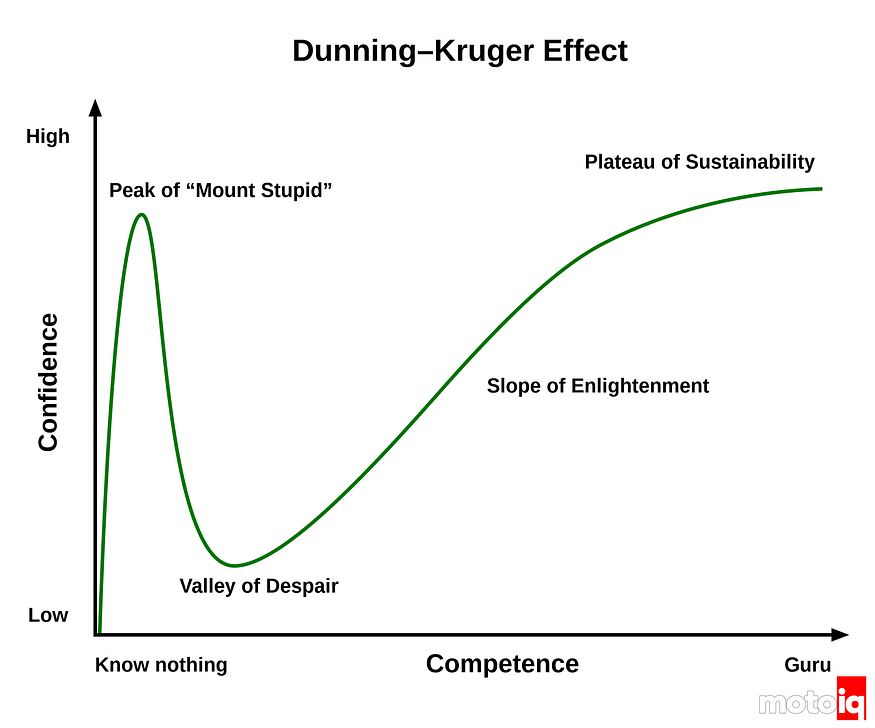
2. The Dunning-Kruger Effect: The Peak of Mt. Stupid
Remember when you first tried cooking a complex dish and thought, ‘Hey, I’m pretty good at this’? Only to realize later that your masterpiece barely scratched the surface? Welcome to the Dunning-Kruger Effect — a humbling journey from the ‘peak of Mt. Stupid’ to the valleys of ‘I have so much to learn.’ It’s a nudge to keep learning, to never stop evolving.
Practical Application: Recognize when you might be on the “peak of Mt. Stupid” and actively seek feedback and knowledge to climb towards true expertise.
3. The Peter Principle: Rising to the Level of Incompetence
Consider Alex, a top-performing sales associate in a retail company. His exceptional sales record led to a promotion to sales manager. However, managing a team, unlike closing sales deals, wasn’t his forte. Alex’s struggle in his new role is a textbook example of the Peter Principle: excelling in one position doesn’t guarantee competence in a higher role.
Practical Application: Assess your own career path. Are you equipped for your current role, or is there a skill gap you need to address?

4. Anchoring Effect: The First Number Sticks
In negotiations, the first number thrown out often becomes an invisible anchor, influencing all that follows. Think about the last time you haggled for a car or negotiated your salary. The initial figure sets the stage, impacting the entire negotiation dance.
Practical Application: Be mindful of initial figures in negotiations — whether you’re buying a car or discussing a raise. Set your anchors wisely!
5. The Cobra Effect: Good Intentions, Unintended Consequences
When the British government in colonial India offered a bounty for cobras, it led to people breeding cobras instead of reducing their population. This is the Cobra Effect, where solutions can sometimes create more problems.
Practical Application: Think through the potential unintended consequences before implementing a solution. Look for a holistic understanding rather than quick fixes.
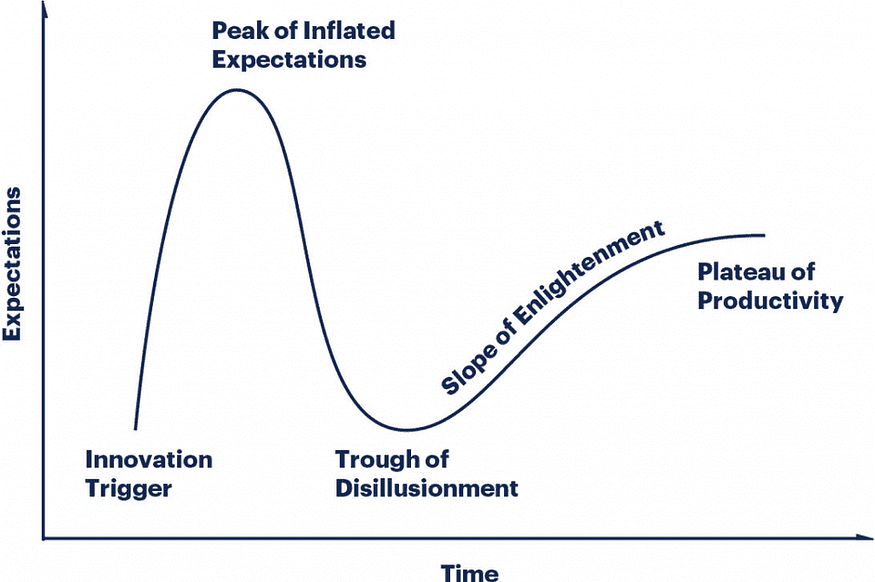
6. Amara’s Law: Misjudging Technology’s Impact
Consider the rise of social media platforms like Facebook or Instagram. Initially, many viewed them as simple online spaces for sharing photos and catching up with friends. However, over time, their long-term impact has been profound, reshaping how we communicate, influencing global politics, and even affecting mental health. This illustrates Amara’s Law: in our tech-driven world, we often overestimate the short-term effects of new technologies while vastly underestimating their long-term implications. This principle is particularly important for businesses and individuals trying to navigate the ever-evolving landscape of the digital age.
Practical Application: Balance your expectations when evaluating new technology. Consider long-term implications, not just immediate benefits.
7. The Law of Least Effort: Path of Minimum Resistance
Consider the popularity of ride-sharing apps like Uber or Lyft. These services exemplify the Law of Least Effort by offering a more convenient alternative to traditional taxis or public transport. People often choose these apps for their ease of use and accessibility.
Practical Application: When designing products, services, or even your daily routine, aim for simplicity and ease to encourage usage and adherence.
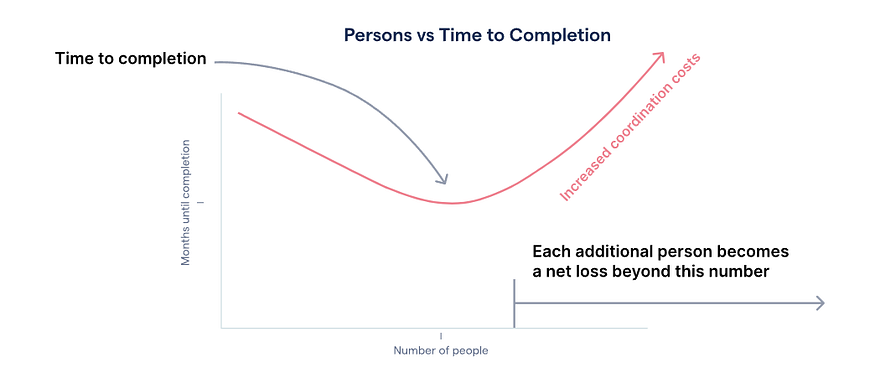
8. Brooks’s Law: More Is Not Always Better In project management
Picture a software development team racing against a tight deadline. In a last-minute bid to speed things up, additional programmers are brought in. Instead of accelerating progress, the project stalls further as the new team members require training and orientation. This scenario is a classic example of Brooks’s Law, which posits that adding manpower to a late project only makes it later.
Practical Application: In managing projects, consider the integration and training time new members require. Sometimes, more is not better.
9. The Law of Triviality (Bike Shedding):
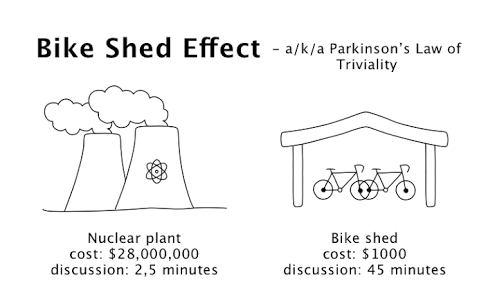
The Focus on the Inconsequential Also known as “Bike Shedding,” this law describes how people spend disproportionate time on trivial issues. It’s a common occurrence in meetings where minor details consume hours while major issues get minimal attention.
Practical Application: Next time you’re in a meeting, play the role of the focus-shifter. Watch how discussions veer towards the inconsequential and gently steer them back to the matters that truly impact the bottom line. Remember, the color of the bike shed might be interesting, but it’s the structural integrity of the building that matters most.
10. The Contrast Principle: Relative Perception
Our perceptions are heavily influenced by comparisons, as illustrated by the Contrast Principle. A moderately priced meal seems affordable next to an expensive one, and a warm day feels hot following a cold spell.
Practical Application: Be aware of how contrast might be affecting your judgments. When making decisions, try to assess options on their own merits, not just in comparison to others.

11. The Endowment Effect: Overvaluing What We Own
Ever wondered why it’s so hard to part with that old guitar gathering dust in the corner, even though you haven’t strummed it in years? Welcome to the Endowment Effect, where everything we own, from musical instruments to quirky collectibles, magically gains an inflated value in our eyes. It’s the reason why garage sales are battles of wills, and why decluttering feels like parting with pieces of our soul.
Practical Application: Next time you hesitate to donate or sell something, ask yourself: “Am I valuing this because of its use, or just because it’s mine?”
12. The Serial Position Effect:
Remembering the First and Last In lists or presentations, the first and last items are typically remembered best. This is known as the Serial Position Effect, encompassing the primacy and recency effects.
Practical Application: When delivering information, place the most important points at the beginning or end. This can be particularly effective in presentations or teaching.

13. The Spotlight Effect: We’re Not as Noticed as We Think
The Spotlight Effect is the tendency to overestimate how much others notice our appearance or behavior. It’s that feeling when you trip in public and think everyone saw.
Practical Application: Remember that everyone is more concerned with themselves than with you. This can be liberating in social situations or public speaking.
14. The Foot-in-the-Door Technique: Small Commitments Lead to Larger Ones
This technique involves getting someone to agree to a small request as a precursor to a larger one. It’s a common principle in sales and persuasion.
Practical Application: Start with small requests to build up to larger ones, whether in fundraising, selling, or persuasion.

15. The Ben Franklin Effect: Seeking Consistency in Behavior
The Ben Franklin Effect suggests that when someone does you a favor, they’re more likely to do you another, as people seek consistency in their behavior.
Practical Application: Don’t hesitate to ask for small favors. It can be a starting point for building stronger relationships.

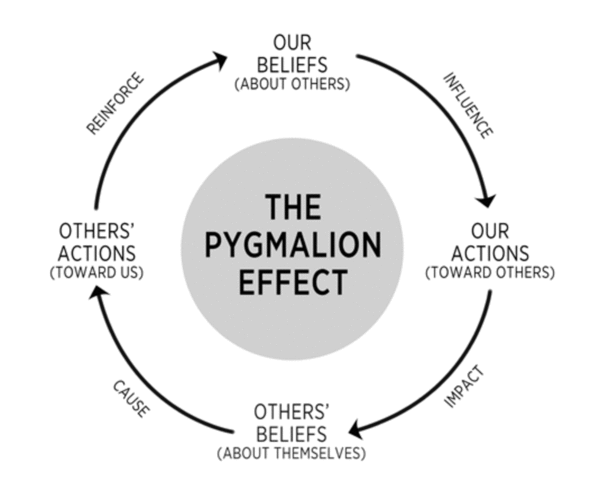
16. The Pygmalion Effect: The Power of Expectations
Consider a manager who believes strongly in a team member’s abilities. That belief, communicated through expectations and support, often results in the employee reaching new heights in their career.This exemplifies the Pygmalion Effect.
Practical Application: Set high expectations for those around you — employees, students, even family members — and provide them with the support to meet these expectations.
17. The IKEA Effect: Valuing Our Own Labor
Consider a meal you’ve cooked from scratch, laboring over each ingredient. Somehow, it always tastes better than a store-bought dish, right? This isn’t just culinary skills at play; it’s the IKEA Effect. The effort we put into creating something, be it food, furniture, or art, endows it with extra value in our eyes. It’s a blend of pride, effort, and, yes, a little bit of love.
Practical Application: Think of something you’ve built or created recently. How does the effort you put into it change how you feel about the final product?
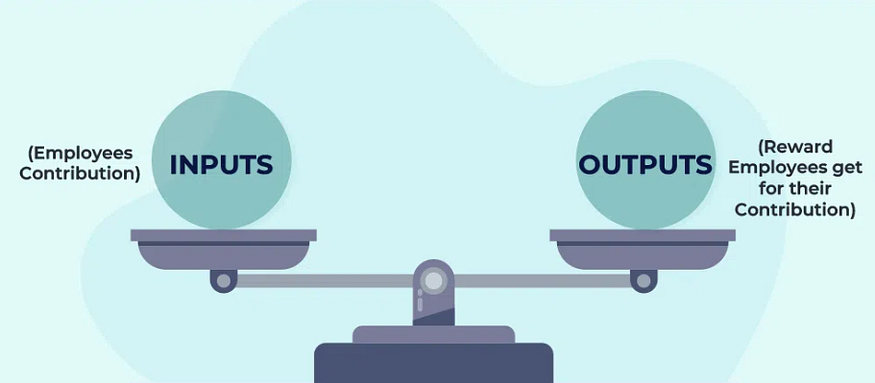
18. Equity Theory: Balancing Input and Output
Picture yourself at work, putting in extra hours, crafting perfect presentations, only to receive the same recognition as your colleague who seems to do the bare minimum. Frustrating, isn’t it? This is Equity Theory in action. It explains why we feel disheartened when our hard work doesn’t seem to pay off as it should. It’s about the balance, or imbalance, of what we put into our jobs (input) versus what we get out of them (output).
Practical Application: Strive for fairness in your interactions. Recognize the efforts of others and ensure they feel valued.
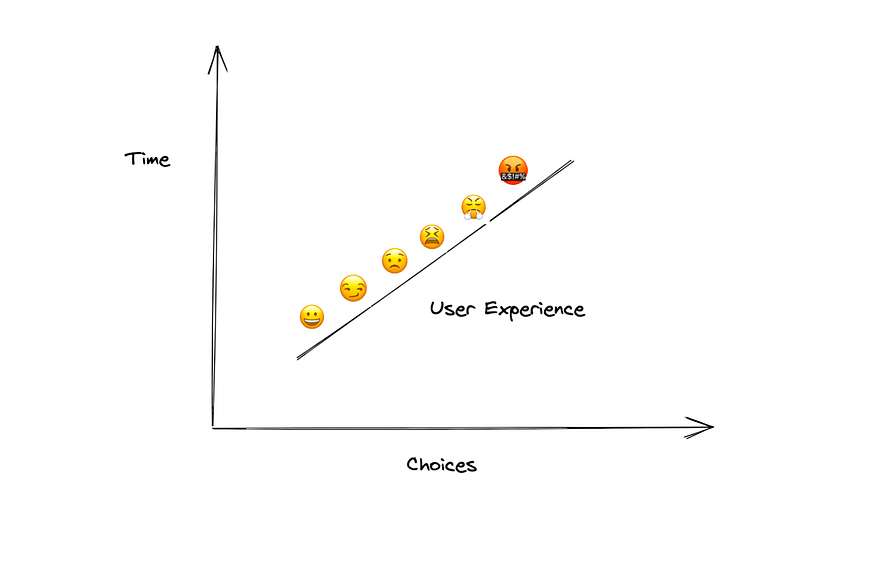
19. Hick’s Law: The Paradox of Choice
Ever found yourself overwhelmed in the supermarket, staring blankly at the dozens of options? That’s Hick’s Law in real life. The more choices we have, whether it’s cereals, cars, or clothes, the harder it becomes to make a decision. This paradox of choice can lead to decision fatigue, making even the simplest choices feel daunting.
Practical Application: Simplify choices to make decision-making easier, whether in business or personal life.
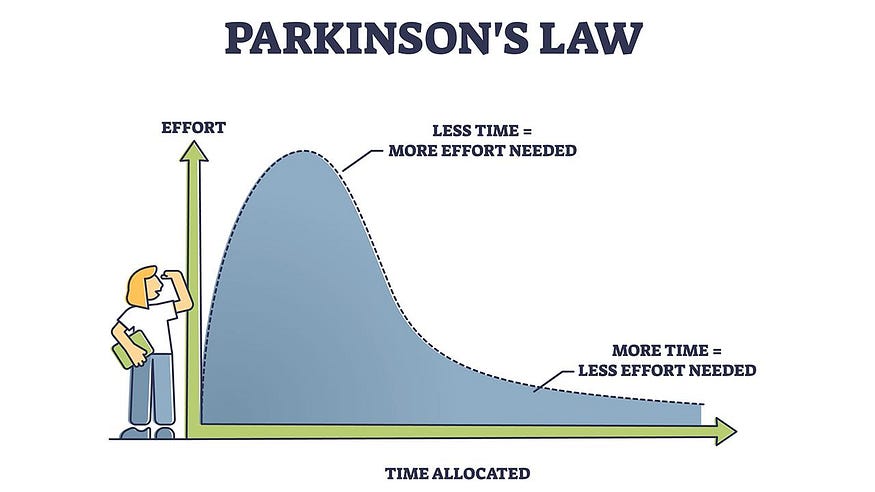
20. Parkinson’s Law: Work Expands to Fill Time
Tasks often expand to fill the time allotted for them, a phenomenon known as Parkinson’s Law. If you give yourself a week to complete a two-hour task, it will take a week.
Practical Application: Set realistic deadlines to improve efficiency. Use this principle to manage time and avoid procrastination.
Conclusion:
And there you have it — a whirlwind tour through the labyrinth of our minds. These principles aren’t just textbook concepts; they’re alive in every decision we make, every relationship we hold, and every goal we chase. Understanding them is like having a roadmap to the human psyche, helping us navigate life with a bit more wisdom and a lot more awareness. So, what’s the next principle you’ll spot in your daily life?